
Why EV training is now essential for independent garages
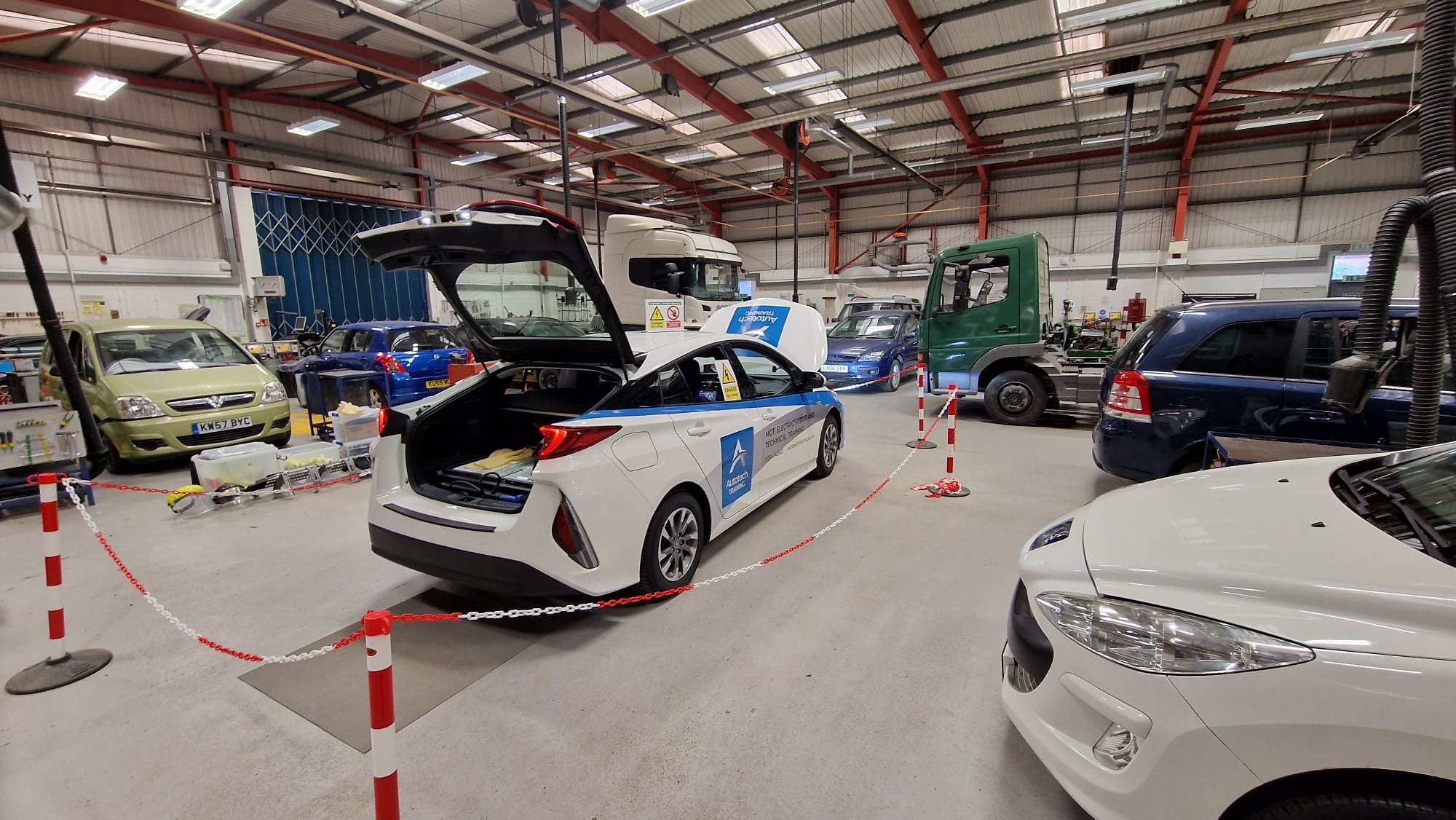
For independent garages, the real cost of EV training is not the course itself – it’s the time away from the workshop. When a technician leaves site for training, the ramp they would normally occupy often sits empty. In commercial terms, that can equate to around £1,000 per day in lost revenue per unstaffed ramp, before travel, accommodation or disruption to workflow are even considered.
This is why EV training has historically been delayed across the independent sector, not due to lack of awareness, but because taking technicians off the tools has felt commercially risky.
However, that hesitation is becoming harder to justify with more than two million new electric vehicles registered in the UK last year, and almost one in four buyers choosing electric. Those vehicles are already filtering into the independent aftermarket, and their presence on workshop ramps is only going to increase.
EVs are no longer contained within franchised networks
As EV adoption accelerates, its impact is now being felt well beyond the new car market. Electric vehicles are entering the used car parc in growing numbers, changing hands more frequently and moving outside franchised dealer networks.
The result is unavoidable: independent garages will see more EVs whether they actively prepare for them or not. Customers expect their usual garage to continue servicing and maintaining their vehicle, regardless of what powers it. When a garage cannot safely work on an EV, it risks more than a single job, it risks the customer relationship itself.
Consequently, EV training is no longer about future-proofing, it’s about staying operational today.
At a practical level, vehicle technicians must understand how to work safely around high-voltage systems, recognise risk and operate within accepted compliance standards. From a business perspective, training prevents garages from turning away routine work, protects reputation and allows informed decisions about what can be handled confidently in-house.
Garages are already seeing this pressure in real terms. “Turning this business away is simply no longer an option,” comments one garage owner. “We need to be prepared, not only to create a new revenue stream and meet customer demand, but to safeguard our employees and equip them with the relevant skills to work safely on these high-voltage vehicles.”
Garages without EV capability are increasingly placed in a reactive position, sub-contracting work, losing customers or declining jobs altogether. As EV volumes grow, that position becomes commercially unsustainable.
The real challenge: downtime, lost revenue and relevance
Despite the clear need for training, the barriers remain very real for independent workshops.
Traditional off-site training takes technicians away from the business, often for at least a full day. For small garages, losing even one technician can disrupt scheduling, reduce throughput and leave expensive workshop ramps unused, with each empty ramp representing significant lost earning potential.
Just as importantly, off-site training often focuses on generic vehicle examples rather than the specific EVs technicians see day to day. For many workshops, this includes fleet vehicles, and when training doesn’t reflect the vehicles coming through the door, its immediate value is reduced.
Onsite EV training offers a more practical route forward
Onsite EV training offers a more practical and commercially aligned solution. Delivered directly at the workshop, training can be tailored to the vehicles the garage regularly services, including fleet cars and light commercial vehicles. This makes the learning immediately relevant, helping technicians apply new knowledge straight away rather than translating it back to unfamiliar models.
For large fleet operators, relevance and downtime are critical. In the case of London black cab fleet operator Sherbet the Electric Taxi Company, EV training was delivered onsite using the electric taxis technicians work on every day, ensuring learning translated directly into real-world application while minimising operational disruption.
“By delivering EV training onsite, technicians are learning in the environment they work in every day, using the equipment and processes they already know,” comments Alistair McCrindle, Operations Director, Autotech Training. “This significantly reduces downtime and helps knowledge stick. Training multiple technicians at the same time also limits disruption, spreads cost and embeds EV capability across the business rather than relying on a single individual.”
The cost of delaying action is increasing
With EV numbers rising steadily, the cost of not training is becoming more significant than the cost of training itself. Lost jobs, empty ramps and weakened customer loyalty all carry long-term financial consequences.
For independent garages, the question is no longer whether EV training is necessary, but how to approach it in a way that protects productivity.