
Workshops warned - EV and hybrid servicing gap could define aftermarket winners and losers
The UK aftermarket is approaching a tipping point, as the rapid growth of hybrid and electric vehicles begins to reshape what it takes to run a successful workshop. According to MAHLE, the shift is not just about new vehicle technologies, it’s about a complete rethink of skills, equipment and service capability, with those failing to adapt at risk of being left behind.
The traditional workshop model, built around mechanical repair, is giving way to a far more complex environment centred on diagnostics, software and high-voltage systems. The industry has already moved from purely mechanical work to on-board diagnostics (OBD) and high-voltage technology, a shift that is only accelerating as vehicle technology continues to evolve.
This transformation is being driven by the rapid expansion of the hybrid and EV parc. While electric vehicles are often perceived as requiring less maintenance, the long-term servicing picture tells a different story. By 2030, there are expected to be 34 million high-voltage batteries in operation across Europe, with around 1.3 million requiring annual maintenance. With battery lifespans typically stretching between 10 and 14 years, the independent aftermarket is set to inherit a significant share of this work as vehicles move out of warranty.
For workshops, this creates both an opportunity and a challenge. Battery diagnostics is fast becoming a core service area, with technologies such as E-Scan and E-Health enabling technicians to assess battery condition, performance and even predict remaining lifespan. Tools like the MAHLE TechPRO®2 diagnostic platform are helping workshops meet this demand, offering an intuitive user interface and advanced E-Scan functionality capable of generating CARA-certified State of Health reports for EV batteries.
At the same time, thermal management is emerging as one of the most critical, and potentially lucrative, areas of service in hybrid and electric vehicles. As electrification increases, so too does the demand for sophisticated cooling systems to manage batteries, power electronics and drivetrains. MAHLE highlights that both rising customer comfort expectations and the technical demands of modern vehicles are driving a significant increase in cooling requirements.
This opens the door for workshops to expand into new service areas, from battery cooling system maintenance to advanced air conditioning and heat pump servicing. Solutions such as MAHLE’s E-Care system, which manages the draining, filling and pressure testing of battery cooling systems, underline how even routine servicing is becoming more specialised, with coolant quality and system integrity playing a critical role in battery performance and longevity.
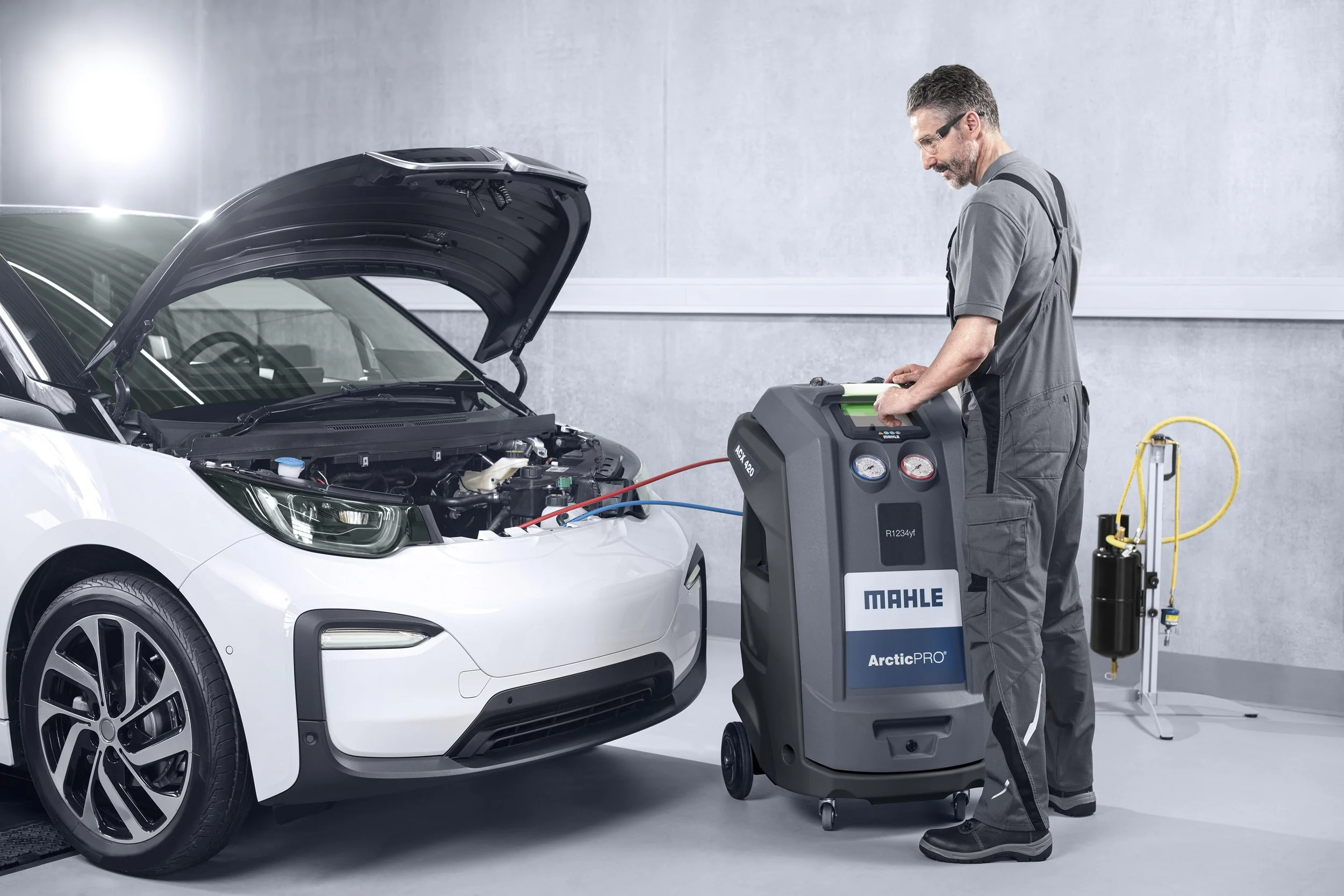
Supporting this, the MAHLE ArcticPRO® ACX 380 and ACX 480 air conditioning service units revolutionise air condition servicing by providing a fully automated recovery, vacuum and refill process, significantly reducing labour time, specialist skills requirement and potential for errors.
The units have integrated circuits for POE oil and UV dye, essential for workshops servicing both hybrid/EV and internal combustion vehicles.
Beyond powertrain and thermal systems, the growing complexity of modern vehicles is also driving demand for Advanced Driver Assistance System (ADAS) calibrations. In response, MAHLE have developed the MAHLE TechPRO® Digital ADAS 2.0. The system has a self-adaptive calibration which eliminates the need to physically move the vehicle and target boards, reducing the time taken to calibrate a vehicle’s ADAS by up to 80%. The result? Greater precision, less training and labour time, plus no requirement to retain a dedicated space only used for ADAS calibrations.
However, unlocking these opportunities requires investment, not just in equipment, but in people. The modern technician is evolving into a high-voltage, IT-literate specialist, with formal qualifications now essential for working safely on hybrid and EV systems. Structured certification levels for high-voltage work reflect the increasing complexity and safety considerations involved.
Andy Lees, Head of Western Europe at MAHLE Aftermarket UK, said: “The workshop of the future is already here, but there’s still a gap between where some workshops are today and where they need to be. Electrification isn’t something that’s coming, it’s already in the workshop. The businesses that invest in training, equipment and service capability today will be the ones that benefit as EV and hybrid demand continues to grow.”