
The Evolution of the EV: Where Are We Now?
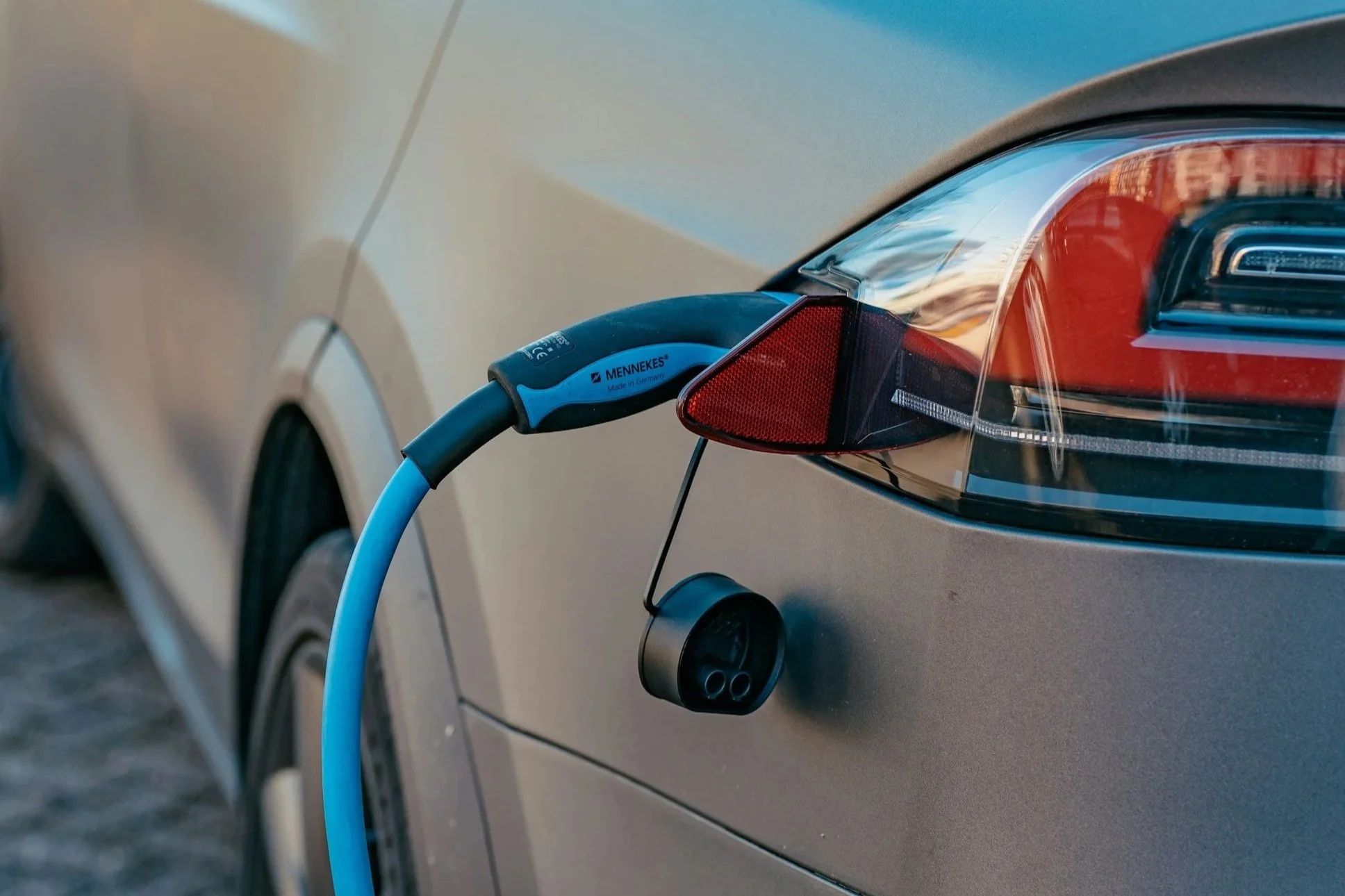
Electric vehicles are no longer the futuristic technology they were once portrayed as, yhey are on our roads, in company fleets, on dealership forecourts and increasingly becoming a familiar part of the aftermarket landscape.
But the journey from early electric cars to today's high-performance, long-range EVs has been anything but straightforward. And while the headlines often make it sound as though the internal combustion engine is disappearing overnight, the reality is considerably more complicated.
So, where have EVs come from, where are they now, and what does the next stage of electrification mean for the automotive aftermarket?
From curiosity to serious contender
Electric vehicles are not a new invention, in fact, electric cars pre-date many of the petrol-powered vehicles we would recognise today.
At the beginning of the 20th century, electric cars were being developed alongside steam and petrol-powered vehicles. Their quiet operation and ease of use made them attractive, particularly for urban driving. However, improvements in petrol engines, the introduction of mass production and the development of the electric starter motor ultimately pushed EVs into the background for much of the 20th century.
It wasn't until the late 20th and early 21st centuries that electric propulsion began its serious comeback.
Modern battery technology, increasing concerns around emissions and major investment from manufacturers transformed the sector. What began with relatively limited-range electric cars eventually developed into a genuine alternative to the internal combustion engine.
The arrival of cars such as the Nissan Leaf and Tesla Model S demonstrated that EVs could be practical, while Tesla in particular changed perceptions about what an electric car could be in terms of performance, range and desirability.
The technology has moved on rapidly
Perhaps the biggest change has been the speed at which the technology has developed. Early mainstream EVs often came with relatively modest ranges and considerable compromises. Today, many electric cars can comfortably cover hundreds of miles on a charge, while rapid charging has transformed the practicality of longer journeys.
Battery technology has also evolved considerably. Manufacturers are increasingly using different battery chemistries to balance cost, range, longevity, performance and sustainability. At the same time, electric motors themselves are remarkably efficient and mechanically simple compared with an internal combustion engine. There are no spark plugs, fuel injectors, timing belts, exhaust systems or conventional gearboxes to maintain.
That doesn't mean EVs are maintenance-free, far from it, the vehicle has simply moved the complexity elsewhere.
High-voltage systems, battery management systems, electric motors, power electronics, thermal management, sophisticated sensors and increasingly complex software are now all part of the modern vehicle.
For the aftermarket, that represents perhaps the biggest change of all.
The EV is becoming an aftermarket vehicle
For years, much of the EV conversation centred around the new car market, but the aftermarket is now becoming increasingly important. The number of used EVs entering the market is growing, bringing electric vehicles into the hands of customers who may never have considered buying one new.
That creates a completely different set of opportunities and challenges for garages, parts distributors, technicians and suppliers. A technician who previously spent much of their day working on engines and exhaust systems may increasingly find themselves dealing with high-voltage systems, battery diagnostics, thermal management and software-related faults.
Meanwhile, the traditional components of the vehicle haven't disappeared, EVs still need tyres, suspension components, steering components, wheel bearings, braking systems, wipers, lighting, air conditioning and a huge range of electrical and mechanical parts. In fact, some components can experience different demands because of the characteristics of electric vehicles.
The instant torque and increased weight of many EVs can place different stresses on tyres and suspension components, while regenerative braking means the traditional friction brakes can experience a very different duty cycle.
This is where the aftermarket needs to understand that an EV isn't simply a car without an engine, it is a different type of vehicle.
Charging: the piece of the puzzle that matters most
If battery technology has been one of the great success stories of EV development, charging infrastructure has arguably been the biggest source of debate. The UK has made enormous progress. In July 2025, the Government reported more than 82,000 public chargepoints across the country, with the network continuing to expand.
But the challenge isn't simply about the number of chargers, it is about having the right chargers, in the right locations, that work reliably and are easy to use.
For someone with a driveway, home charging can make EV ownership remarkably convenient. Plug the car in overnight and wake up with a full battery, for drivers without off-street parking, the experience can be very different.
That is why the development of reliable on-street, workplace, destination and rapid charging remains critical to wider adoption. Government analysis has previously highlighted the importance of a comprehensive network and identified the need for hundreds of thousands of public chargepoints as EV numbers increase.
The good news is that charging technology itself is advancing quickly.
Ultra-rapid chargers can now deliver significant amounts of energy during a coffee stop, while smarter charging systems are beginning to integrate EVs into the wider energy network, the car could increasingly become more than a consumer of electricity, it could become part of the energy system.
So, has the EV revolution actually happened?
Yes - but perhaps not in the way many expected. The UK has seen huge growth in electric vehicle sales. More than 381,000 electric cars were sold in 2024, making the UK Europe's largest EV market that year, but EV adoption isn't uniform.
Some drivers have embraced electric vehicles enthusiastically. Others remain concerned about charging, purchase price, depreciation, battery longevity, towing capability, rural driving or simply whether an EV suits their lifestyle, and that's important, the industry needs to move away from the idea that there is one single EV customer, because there isn't.
There are company car drivers, urban commuters, families, high mileage users, fleet operators, enthusiasts and people buying their first used EV, each has different requirements.
The road ahead
The UK's direction of travel is clear, even if the speed of that journey continues to evolve, the Zero Emission Vehicle Mandate requires manufacturers to increase the proportion of zero-emission vehicles they sell, with the Government's framework targeting 80% of new cars and 70% of new vans to be zero emission by 2030, rising to 100% by 2035.
That doesn't mean petrol and diesel vehicles suddenly disappear from the roads, quite the opposite. The UK vehicle parc will remain a mixture of technologies for many years. Millions of petrol and diesel cars will continue to require servicing and repair, while hybrids and EVs increase their share.
For the aftermarket, that means we're entering a period of unprecedented technological diversity, the industry will need technicians who understand high-voltage systems alongside traditional mechanical skills. Parts manufacturers will need to develop products specifically for EV applications. Training providers will need to keep pace with rapidly changing technology.
And garages will need to decide how quickly they invest.
The opportunity for the aftermarket
The biggest mistake would be to view electrification simply as a threat to the traditional aftermarket, it is certainly going to change the business model, but change creates opportunity.
The UK Government's own battery strategy has highlighted the potential for substantial growth in EV production and associated supply-chain and aftermarket opportunities. The businesses that understand EV technology early, train their people, invest in the correct equipment and build customer confidence could find themselves extremely well placed, because ultimately, the customer still needs somewhere to go when something goes wrong.
The difference is that the technician plugging into the diagnostic system might be looking at a battery management system rather than an engine ECU, they might be diagnosing a wheel-speed sensor that is critical to regenerative braking rather than simply ABS, or they might be investigating thermal management rather than a cooling system in the traditional sense.
The fundamentals of the aftermarket haven't disappeared, they've evolved.
The EV is here — but the transition isn't finished
Perhaps that's the most important point, the EV isn't the future anymore, it's the present. however we're still relatively early in the transition. Battery technology will continue to develop, charging will get faster and more accessible. Vehicle software will become increasingly important. New manufacturers will continue to enter the market, while established brands adapt their strategies.
Alongside all of that, the internal combustion engine will remain an important part of the automotive aftermarket for many years, for garages, distributors and suppliers, the question isn't whether EVs are coming, they are already here.
The question is whether the aftermarket is ready for what comes next.