
Auto Windscreens celebrates 55 years in the industry
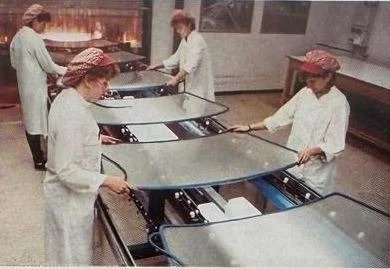
In 1971, the year Britain adopted the ‘new’ decimal currency, platforms were all the rage and Rod Stewart had a number one with Maggie May, Brian Holmes founded Auto Windscreens in Chesterfield.
The company is celebrating its 55th anniversary on Wednesday 20th May. It originally operated from the Old Brampton Brewery Company premises, and as business grew, moved to its head office in Chesterfield. By the 1990s, it was capable of manufacturing up to 250,000 windscreens, was looking after agricultural and plant vehicles, cranes and ships. Today, it does not manufacture glass, but has 82 service centres around the UK and the majority of its work is undertaken for commercial fleets and private car customers through insurance partners.
Managing Director, James MacBeth, who started his career at Auto Windscreens as a Trainee Technician in 1992 explains how the industry has changed: “Windscreens had previously been made from toughened glass, but it became a legal requirement to use laminated glass in 1983 and they were secured with rubber gaskets. Technology in glass was limited, with Citroën introducing rain sensing wipers in 1970 and heated windscreens not appearing on popular models until the 1980s.
“The landscape now couldn’t be more different. New cars sold in the EU and Northern Ireland must be equipped with specific Advanced Driver Assistance Systems (ADAS) as standard. Although this isn’t yet mandatory in the UK, many cars now include at least one ADAS feature. This makes our technicians’ role more involved - when replacing a windscreen, any sensors need to be carefully disconnected, before the old glass is removed with a lifting tool. Once the new glass and any sensors are back in place, ADAS features need calibrating.
“Of the vehicles having a windscreen replacement with us, currently 41% require an ADAS calibration. The design of cars has changed too - typically they have larger windscreens and panoramic glass sunroofs are popular, making them more at risk of damage. Take one of the smallest cars on the market as an example, the Mini – even on this model the modern windscreen is around 46% larger than the Mk1 version.
“I’ve seen many of the industry changes first-hand and the market is moving faster than ever due to new vehicle technologies being introduced. We’re proud of our history, our growth and I want to thank every member of our team, past and present, who’s helped us reach this milestone. After more than half a century of working, developing and innovating in vehicle glazing, we’re ready for 55 more!”