
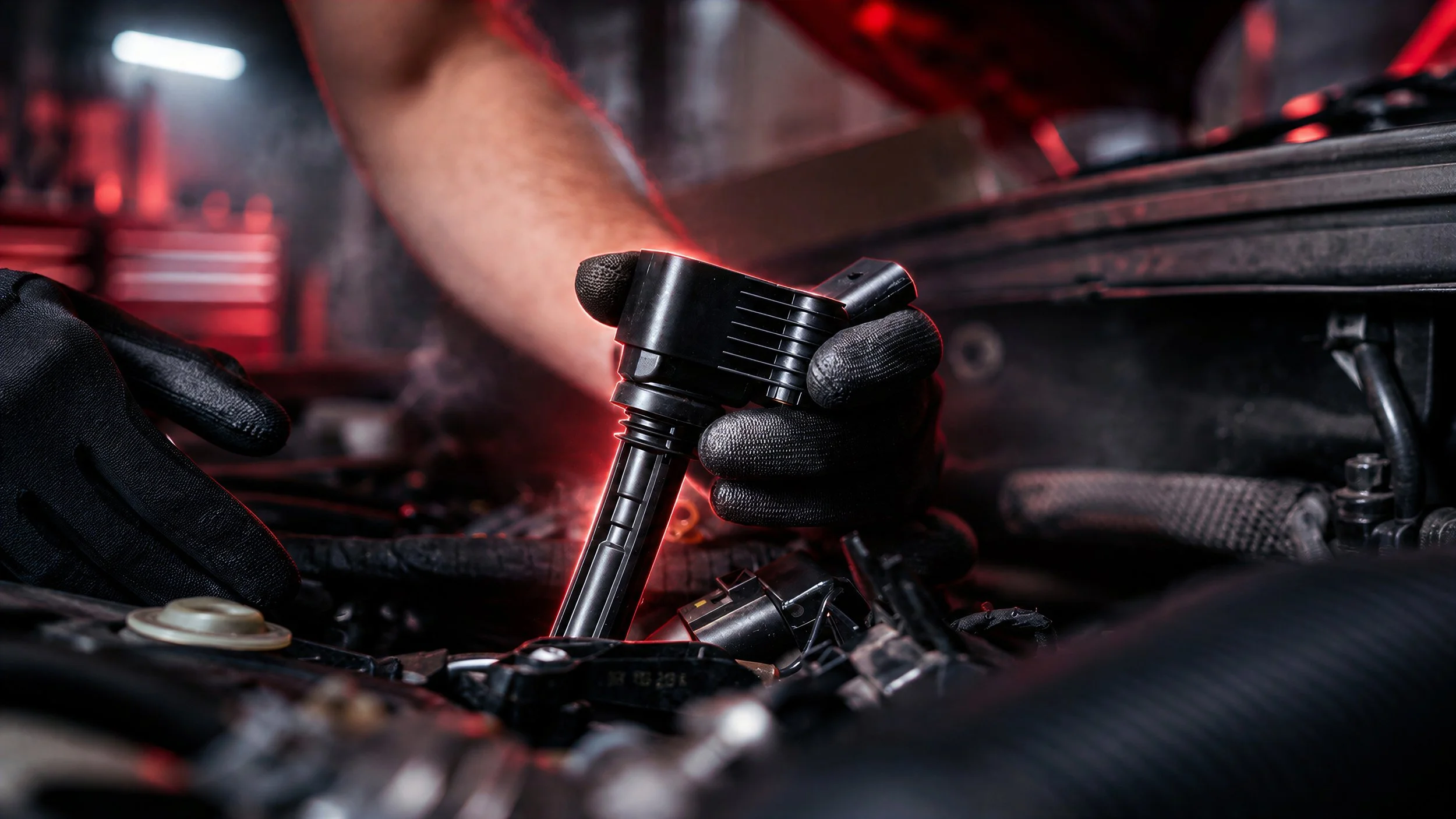
Turning seasonal demand into a service opportunity
Colder seasons affect more than cabin comfort. From late-summer mornings through autumn and winter, low temperatures, moisture and frost place the ignition system under greater strain.
Ignition coils with early signs of wear or internal degradation may still perform normally in warm weather, but cold and damp conditions quickly expose and accelerate these weaknesses. The result can be difficult cold starts and reduced ignition performance.
Learn why seasonal weather drives higher demand for ignition coils and discover the recommended aftermarket solution for reliable engine ignition.
Colder Seasons Reveal Ignition System Issues
Modern ignition systems are designed to operate reliably in low temperatures, moisture, and frost. However, colder months are also the peak season for ignition-related complaints and ignition coil replacements.
This is because winter conditions tend to expose existing ignition system wear and degradation, revealing weaknesses that may remain unnoticed during warmer periods.
HIGHER IGNITION DEMAND
Low temperatures make engine starting more demanding. Cold, more viscous engine oil increases cranking resistance, requiring more effort from the starter motor and battery. At the same time, fuel vaporizes less efficiently, making the air-fuel mixture harder to ignite, while battery output is reduced. As a result, the ignition system faces higher demands precisely when combustion conditions are least favorable.
PERFORMANCE IS KEY
The ignition coil converts the battery’s low voltage into the high voltage required to generate a spark. During cold starts, it operates under some of the most demanding conditions it will encounter. Any age-related wear, insulation degradation, voltage leakage, or internal damage can reduce spark quality and become more apparent.
This is why ignition coil weaknesses often surface during colder seasons as hard starts, rough idling, misfires, or reduced engine performance.
What happens to an aging, high-mileage coil?
It may still function in mild or warm weather but struggle to generate sufficient spark energy during cold starts as its performance degrades over time.
EXTERNAL AGING
· Cracks & moisture ingress
· Connector corrosion
· Boot deterioration
· Carbon tracking & arcing marks
INTERNAL AGING
· Insulation degradation
· Winding wear and damage
· Voltage breakdown
· Reduced spark output
THE RESULT
· Extended cranking
· Hard starting
· Rough idle
· Cold-start misfires
· Check-engine-light events
VOLTAGE LEAKS - High voltage always seeks the easiest path. Modern ignition coils generate between approximately 20,000 and 60,000 volts. If the coil housing, boot, insulation, or connector area develops cracks or degradation, high voltage may escape before reaching the spark plug.
MOISTURE - Rain, fog, condensation, frost and high humidity create conductive paths on damaged coil surfaces. In warm, dry conditions, a worn coil may continue to operate normally. However, when moisture appears, weaknesses in the insulation become evident, allowing voltage to track across the coil surface. Ultimately, less spark energy reaches the plug, causing ignition problems such as misfiring.
LOW TEMPERATURES - Close-to-zero temperatures and repeated freeze-thaw cycles can worsen existing microcracks in aging coil housings and insulation materials. As a result, components that performed reliably during summer may begin showing symptoms in autumn and winter.
BEST SERVICE PRACTICE
Diagnose Thoroughly
Before replacing an ignition coil, perform a complete system diagnosis. Check OBD fault codes, inspect wiring and connectors, and look for signs of insulation breakdown, carbon tracking, moisture intrusion, contamination, or arcing.
Replace, Do Not Repair
Ignition coils are precision-engineered, epoxy-sealed, non-serviceable components. Once affected by internal damage, insulation breakdown, or age-related degradation, they should be replaced rather than repaired.
Replace All at Once
The failure of one coil may indicate similar wear in the remaining units. Replacing all coils helps ensure balanced ignition performance and reduces the risk of repeat repairs.