
How Employer Brand Is Shaping Hiring Decisions
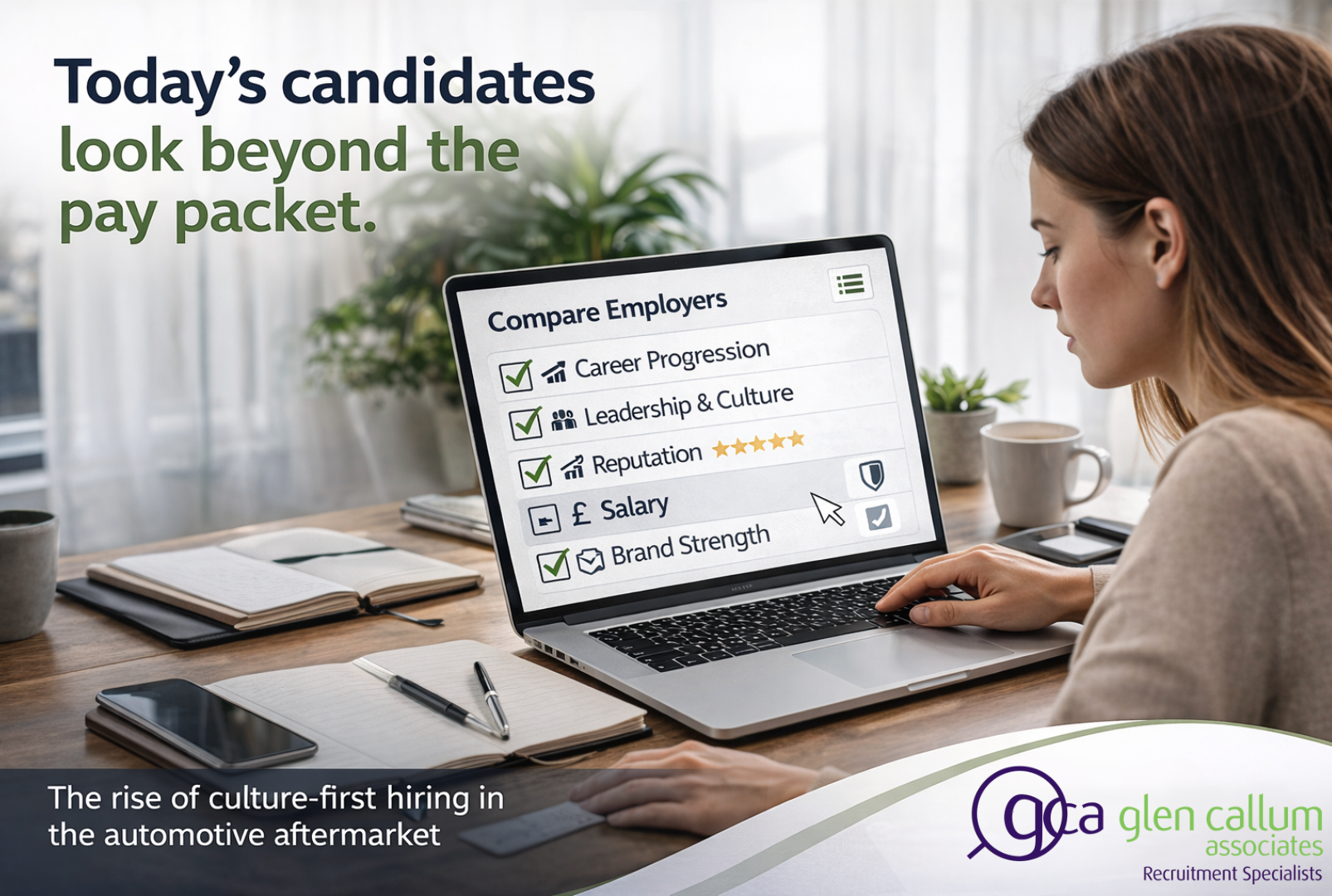
Across the automotive aftermarket, we’re seeing a clear shift in how candidates approach career moves.
From our daily conversations with jobseekers decisions are becoming more rounded. People are weighing up brand strength, leadership visibility, culture and long-term career direction, as well as the financial package on offer. The businesses securing the strongest people are not always those with the biggest budgets, they’re the ones giving candidates confidence in where the business is heading.
Put simply, reputation is carrying more weight than it did even a few years ago.
Today’s candidates are far better informed. Many will have reviewed leadership profiles, scanned recent company news and reviews, and formed a view on market position before the first conversation even takes place. By the time an offer is on the table, they’re not just comparing salaries, they’re deciding whether they can genuinely see their future with that organisation.
We recently supported a senior aftermarket professional who chose to join a well-known market leader on a slightly lower package. For them, the decision was about long-term exposure, leadership strength and career trajectory rather than financial gain. It’s the kind of considered move we’re seeing more often, particularly at senior level.
That doesn’t mean salary has become less important. It absolutely still matters. But it now sits alongside a wider set of expectations around clarity, stability and culture.
For employers, the good news is that many aftermarket businesses already have strong stories to tell. We speak to companies every day that are doing impressive work, investing in people, developing new products and building solid customer relationships. Where some are missing opportunities is simply in how clearly they communicate this to the outside market.
Employer brand isn’t about polished slogans. Candidates tend to look much deeper than that. What resonates most strongly is consistency, how leaders talk about the business, how progression is discussed in interviews and whether the day-to-day reality matches the message.
When that alignment is clear, hiring conversations tend to move much more smoothly. Candidates engage earlier, processes run more efficiently and offer acceptance rates improve because expectations have been set honestly from the start.
From where we sit in the market, the direction of travel is clear. Salary will always be part of the decision, but clarity, credibility and culture are increasingly what give employers the edge.
And for candidates, the key question is shifting too. It’s no longer just, “What’s the package?” It’s, “Can I build something meaningful here?”