
MOT Modernisation Raises Next Question: What About ADAS?
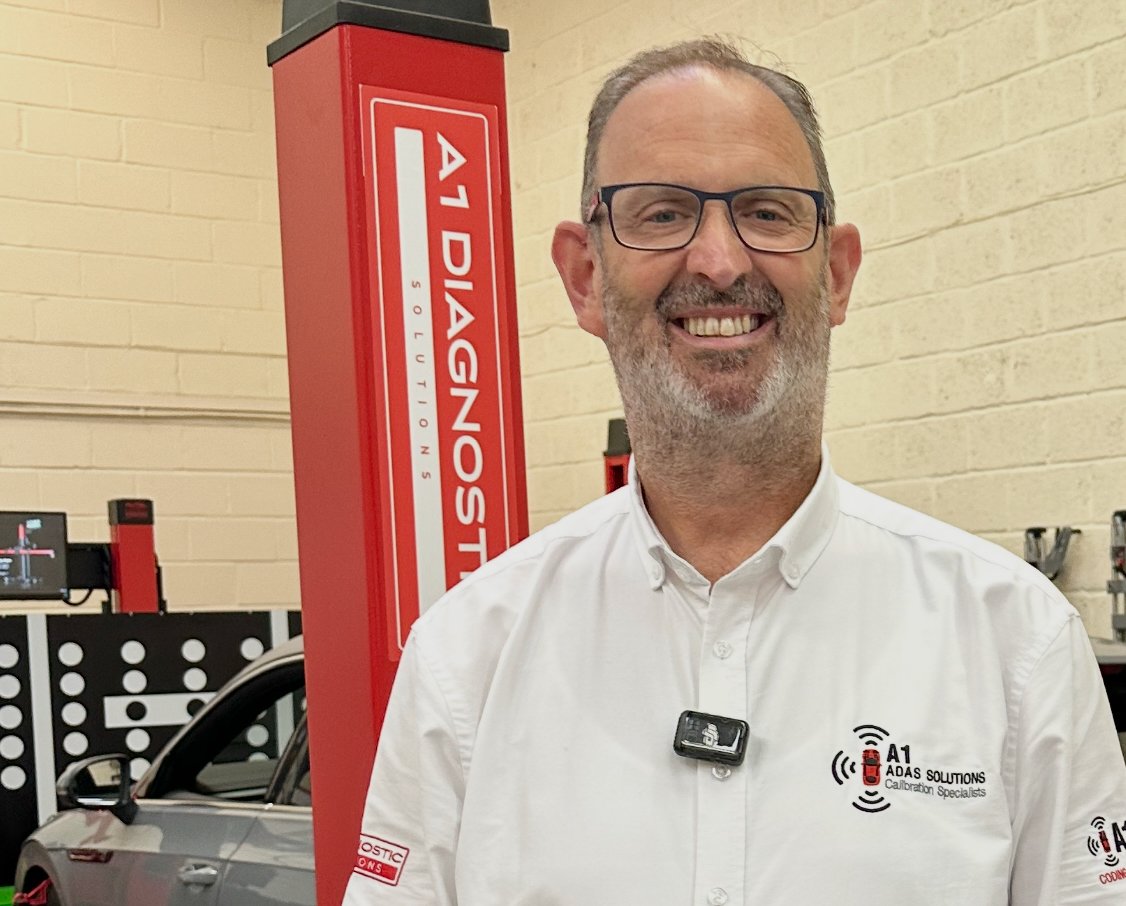
ADAS expert says latest MOT changes should prompt workshops to prepare for future driver assistance checks
Upcoming changes to the MOT test from 1 April 2026 highlight how vehicle safety regulation is evolving and, according to ADAS expert Iain Molloy, they should also prompt the industry to start preparing for the next question likely to come into focus: how Advanced Driver Assistance Systems (ADAS) will fit into future roadworthiness testing.
From 1 April, MOT testing will introduce several updates designed to reflect the changing nature of the car parc. New requirements will include specific visual safety checks for electric and hybrid vehicles, covering high-voltage cabling, battery mounting and charging ports. New MOT bays will also be required to install lifting equipment with a minimum safe working load of two tonnes to accommodate heavier modern vehicles, particularly EVs.
At the same time, the DVSA continues to trial and develop the use of photographic evidence during MOT testing as part of efforts to tackle so-called “ghost MOTs”, where certificates are issued without a vehicle being properly inspected.
While these changes focus on immediate safety and compliance issues, Molloy believes they highlight a broader shift in how roadworthiness testing will need to evolve as vehicle technology advances.
For the managing director of A1 ADAS Group, the question is no longer whether ADAS will eventually become part of the MOT conversation, but how that could realistically work in practice.
“ADAS systems are now responsible for preventing a significant number of collisions on the road,” he said. “Features like automatic emergency braking, lane assist and driver monitoring aren’t theoretical safety aids anymore. They intervene in real-world situations every day.
“But the key point is that they only deliver that safety benefit when they’re functioning correctly.”
Molloy points out that ADAS systems can be significantly out of calibration without displaying a dashboard warning light, meaning drivers may be unaware that systems designed to intervene during an emergency are no longer operating as intended.
“As the car parc becomes increasingly reliant on these technologies, the question naturally arises about whether roadworthiness tests should also consider them,” he said.
However, while the safety argument for ADAS checks is strong, Molloy believes the practical realities of MOT testing make the issue far from straightforward.
“ADAS doesn’t behave like traditional MOT items,” he explained. “You can visually inspect brakes, tyres or suspension components and get a good sense of their condition. With ADAS, that simply isn’t the case.
“A visual walkaround tells you nothing. And while a warning light may appear when a system is seriously compromised, subtle misalignment can leave a vehicle looking perfectly healthy on the dashboard while performing well below the manufacturer’s intended safety parameters.”
One of the most significant barriers to incorporating ADAS calibration into the MOT is the environment required to perform the work correctly. Calibration procedures typically require level floors, controlled lighting and precise distances for targets and equipment.
“Many MOT stations simply don’t have the space to carry out ADAS calibration,” Molloy said. “Even many full-service workshops struggle to meet the physical requirements, so expecting every MOT station to do it during a standard test simply isn’t realistic.”
Skills and training present another challenge. While the number of workshops offering ADAS services is increasing, the pool of technicians formally qualified in calibration procedures remains relatively small compared with the growing demand.
“If the MOT suddenly required ADAS calibration as part of the process, the industry would immediately face a significant capacity issue,” he added.
For Molloy, the solution is unlikely to involve performing full ADAS calibrations inside MOT test bays. Instead, he believes a more workable approach would see the MOT acting as a verification point rather than the place where calibration itself is carried out.
“One option would be for the MOT to record ADAS fault status and verify that calibration has been completed by a qualified centre,” he explained. “That could potentially be supported by a national database of calibration records, allowing testers to confirm whether a vehicle’s systems have been checked within an appropriate timeframe.”
Such an approach would acknowledge the safety importance of ADAS without placing unrealistic demands on MOT stations.
“There’s no doubt these systems are becoming a fundamental part of vehicle safety,” Molloy said. “Ignoring them entirely in roadworthiness testing will become harder to justify as more vehicles rely on them.”
At the same time, he cautions against introducing superficial checks that give motorists a false sense of reassurance.
“A simple tick-box exercise doesn’t improve safety,” he said. “If ADAS is ever included in the MOT, it has to be done in a way that genuinely reflects how these systems operate and how they should be maintained.”
With MOT reform underway, Molloy believes workshops should already be considering how ADAS will fit into their future operations.
“Now is the time for workshops to look at where ADAS sits within their business,” he said. “That may mean forging strong working partnerships with ADAS specialists offering mobile calibration services or investigating what ADAS capabilities they can realistically bring in-house.”
“One thing is clear,” he concluded. “Doing nothing isn’t a long-term option. ADAS will have to become part of the roadworthiness conversation. The challenge is making sure the solution is practical for the industry while genuinely improving safety on the road.”