
Motaquip reveals importance and techniques of quick and accurate air mass meter diagnosis
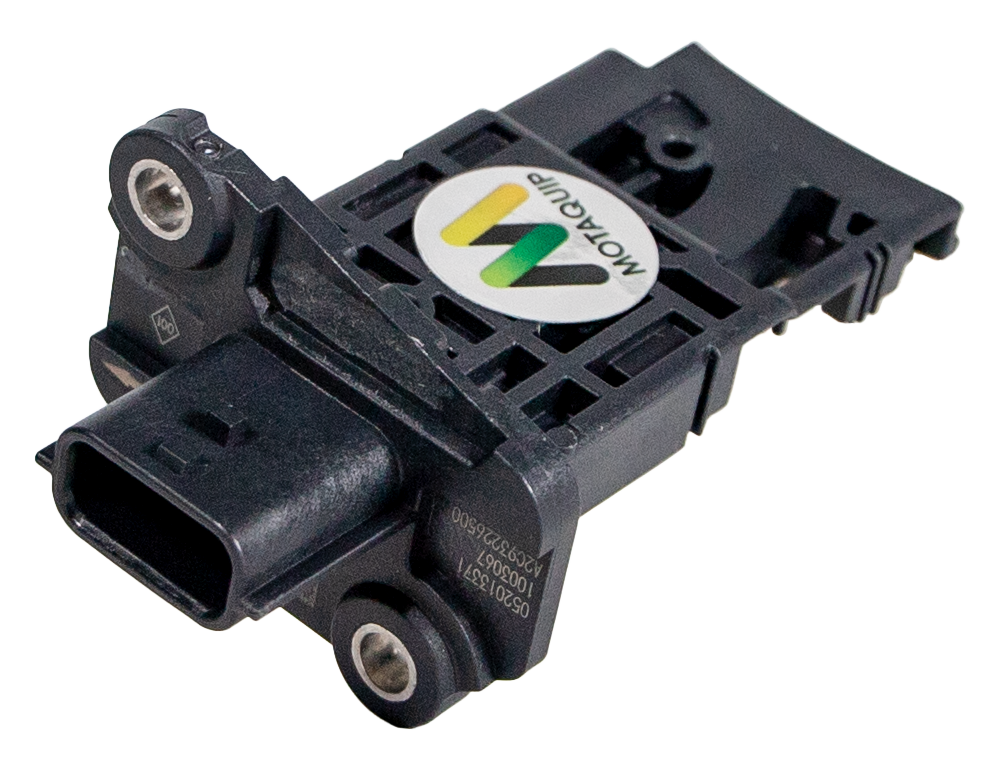
Air mass meters (AMMs) measure the mass of air entering the engine, providing the ECU with the data it needs to calculate precise fuelling for efficient combustion and low emissions. Using a temperature-controlled platinum sensor, airflow is translated into a signal the ECU can interpret – but what happens when AMMs go wrong? Motaquip shares practical guidance to help technicians diagnose AMM faults quickly and accurately.
When a vehicle arrives with a potential AMM-related issue, the first step should be an assessment of the engine’s behaviour under different operating conditions. Engines affected by a faulty AMM can run reasonably at idle but hesitate, lack power or vibrate when accelerating. Disconnecting the AMM may even improve driveability, as the ECU swaps default airflow values – but it is a sign that the AMM signal is flawed.
Specific diagnostic trouble codes (DTCs) – while not definitive proof – are a useful guide when they appear frequently. Typical AMM-related DTCs include P0100, P0101, P0102, P0103 and P0104. There are also secondary DTCs, such as P0170/P0171/P0172 (fuel trim or mixture adaptation faults), P2187/P2188 (system too lean or too rich at idle) and P0300-P030x (random or cylinder-specific misfire codes).
Fault code context is important here; relying on DTCs alone may not provide a complete nor correct diagnosis. Airflow plausibility faults, fuel trim limits or mixture adaptation errors can accompany AMM failures – but these codes can be triggered by other components.
For this reason, these should be considered alongside live data, like measured air mass, engine load and fuel trim values.
Furthermore, analogue AMMs can be checked using a voltmeter (0-5V). On ignition, the output voltage should rise with airflow at idle, increase smoothly as engine revs rise and return to idle values when the engine slows. Many modern vehicles, however, now use digital AMMs, which produce a waveform rather than a voltage. These sensors are sensitive and responsive, but testing requires an oscilloscope for precise measurement.
The cost of a failed AMM
Because symptoms overlap with several other fuel and air delivery faults, accurate diagnosis of a failed AMM, along with a quick replacement, is essential. Not doing so can lead to exacerbated damage, worsening performance and pose hazards.
Incorrect fuel mixture: Wrong air readings can cause lean or rich running, which increases the risk of engine damage and fuel wastage.
Damaged components: The catalytic converter, oxygen sensors and spark plugs are all susceptible to damage in the event of failed AMMs left unreplaced.
Drivability: Faulty AMMs can cause power losses, hesitation in the engine and even stall it. Obviously, this creates hazardous driving conditions.
Engine management problems: Defective AMMs can force the ECU into ‘limp’ mode. This can lead to the real fault being masked, more error codes being generated and, ultimately, making diagnosis and repair harder.
Conclusion
This highlights how AMMs are critical to the smooth running of engine management systems, and the consequences of not diagnosing and replacing damaged AMMs can be severe. Accuracy and speed are imperative, and Motaquip is confident that the bulletin above will bolster technicians’ ability and confidence when faced with this type of job in the future.