
What happens if the oil filter is never replaced?
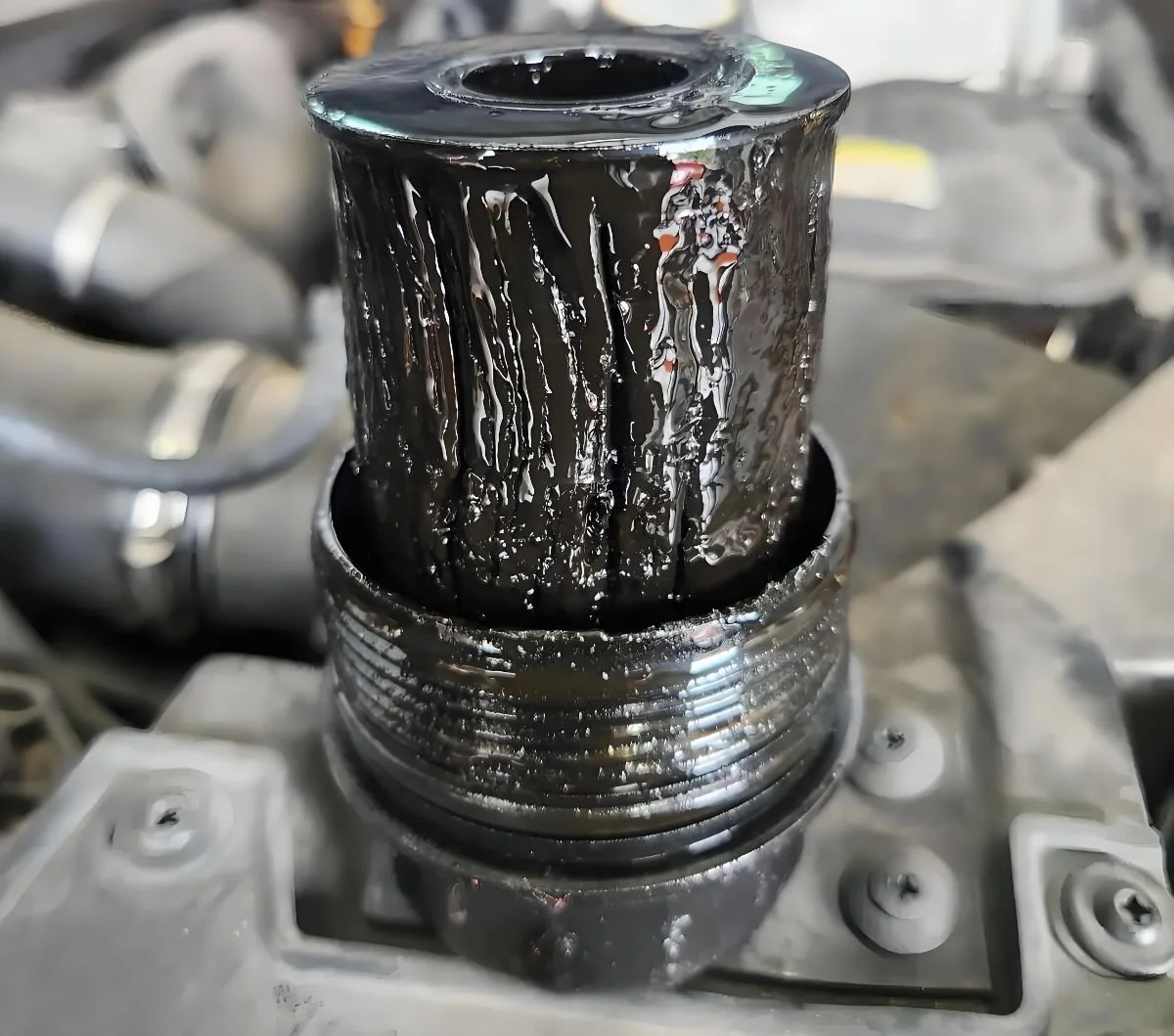
Why does the oil filter, an apparently ordinary component, become the ‘main character’ whenever maintenance is carried out? How do thousands of driving miles affect it? UFI, a global leader in filtration and thermal management solutions as well as green hydrogen technologies, explains the life cycle of the oil filter – from new to 30,000 kilometres on the road.
0 KM: BRAND NEW
In a newly replaced oil filter, the structure of the filter paper and the internal components are in the same condition as when they left the production line. Inside, there is a non-return valve, whose function is to prevent oil from draining out of the filter when the engine is switched off, ensuring a perfect seal. The bypass valve only operates during cold starts, while under normal conditions it remains closed.
When oil passes through the filter, any mechanical impurities and colloids inside can be effectively removed. The oil flows easily through the filtering media, encountering low resistance. This means it reaches components such as the crankshaft and camshaft surfaces precisely, forming a complete film. This creates a contaminant-free lubricating environment for the engine, thereby preventing premature wear of its internal parts
0 KM–30,000 KM: HIGH-EFFICIENCY OPERATION
As the vehicle’s mileage increases, in the oil filter the surface of the filtering media gradually traps impurities such as metal fragments and colloids. During this process, due to the constant absorption of these particles, the filtration pores gradually become blocked. However, filtration efficiency actually ‘improves’ until it reaches peak performance.
At this stage, the filter can effectively remove impurities from the oil. The bypass valve remains ‘inactive’, and the oil flow resistance slowly increases while remaining within a safe and controllable range.
OVER 30,000 KM: A CRITICAL PERIOD FOR FAILURES
With further mileage, however, the filtration precision of the oil filter drops significantly. At this stage, the filter media accumulates a large number of impurities, and oil flow resistance increases considerably. The bypass valve starts to activate occasionally, allowing unfiltered oil to flow directly into the engine, causing serious wear to its internal components. With prolonged use, the non-return valve tends to lose its elasticity, reducing its hydraulic seal. This phenomenon causes oil to return to the sump, resulting in the filter being emptied.
When starting the engine, the oil hydraulic circuit also takes longer to reach operating pressure, leading to non-continuous or delayed lubrication of mechanical parts. This accelerates component wear and increases the risk of overheating and potential engine damage.
At this stage, the only thing to do is to replace both the oil and the filter promptly, to ensure the proper functioning of the vehicle.
NEXT STAGE: BREAKDOWN FAILURES
What happens if the oil filter is not replaced when necessary? If it is not changed, the internal filtering media can become damaged or collapse. The filtration effect becomes virtually nil, and unfiltered oil flows straight into the engine, with serious consequences for all lubricated components.
For example, lubrication with unfiltered oil can have an abrasive effect on the walls of the combustion chamber. This allows oil to enter the combustion chamber and causes blue smoke to be emitted from the exhaust. Maintenance costs will rise significantly. In mild cases, replacing the piston rings and regrinding the cylinder might be enough, though costly; while in more serious cases the engine may need to be replaced.
UFI’S RECOMMENDATIONS
Regular maintenance and replacement of the oil filter are essential, not only to effectively extend the engine’s lifespan but also to ensure driving safety.