
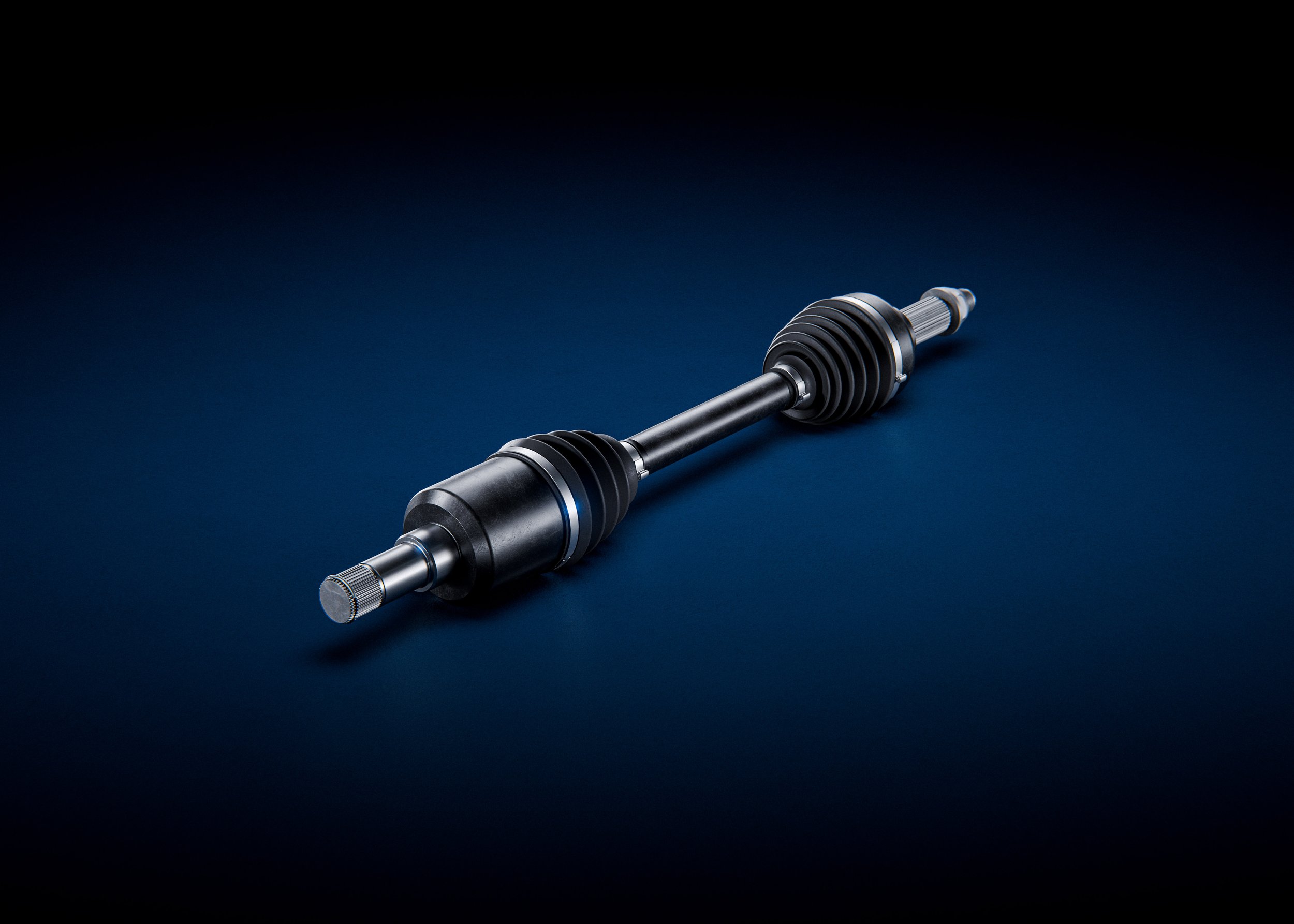
MEYLE’s HD drive shaft designed around four updates to focus on parts that wear first
Supports workshops with less vehicle downtime
Developed to cope with the demands of everyday van driving
Ask a workshop why a drive shaft has failed and the answer is rarely the shaft itself. Split boots, lost grease and the ingress of dirt and moisture are common causes, but equally significant are the demanding operating conditions that vans face every day. High mileage and heavy loads place considerable stress on drive shaft joints and materials, particularly in vehicles such as the Ford Transit. When combined with exposure to external contaminants, these stresses can accelerate wear and ultimately lead to premature failure.
MEYLE's new HD drive shaft for the Ford Transit has been developed to address these key weak points, incorporating four coordinated technical optimisations designed to enhance durability under demanding everyday operating conditions.
Drive shafts transmit torque from the engine, via the transmission, to the drive wheels, while compensating for steering movements, suspension travel and changes in length as the drivetrain and suspension move. Boots and lubrication are key factors in joint service life: a damaged or aged boot lets grease out and water spray and dirt in, which accelerates wear and can lead to corrosion.
MEYLE's HD design focuses on the wear-prone components, in particular the boots and joint geometries, alongside optimised material selection.
The four updates include, boots made from TPE (thermoplastic elastomer) in place of CR rubber, to reduce wear where folds contact one another during articulation - dimensionally stable boots keep grease in and dirt and moisture out. A UF design replaces the RF design at the outer joint, allowing a maximum articulation angle of up to 50° compared with 45°. The vehicle's usable steering angle remains limited by its kinematics and steering stops, so the key benefit is greater load-bearing capacity.
Furthermore, a six-ball DOJ constant-velocity joint replaces the three-roller AAR tripod joint, reducing contact pressure between the joint components, minimising wear in the raceways and extending service life. The material used for the intermediate shaft has also been specifically optimised to address known weak points and improve fatigue strength under demanding operating conditions, complementing the joint and boot enhancements.
MEYLE says the four changes work in tandem - more robust boots keep grease in the system, lower contact pressure reduces joint wear, a larger articulation angle increases load-bearing capacity in demanding driving situations and the material used for the intermediate shaft supports torque transmission in continuous operation.
Karl Varley, Head of Sales UK & Ireland at MEYLE, said: "For van operators, downtime is the real cost of a drive shaft failure and in our experience, it usually starts with the boots and joints rather than the shaft itself. With the MEYLE HD drive shaft for the Ford Transit, we've reworked those wear-prone areas together, from the TPE boots to the joint design and shaft material, so the whole unit is built to cope with the demands of everyday van use. Supplied as a complete, pre-assembled unit, it also keeps the job straightforward for the workshop."