
Autoelectro supporting rare parts as the UK automotive sector goes through ‘transition’ period
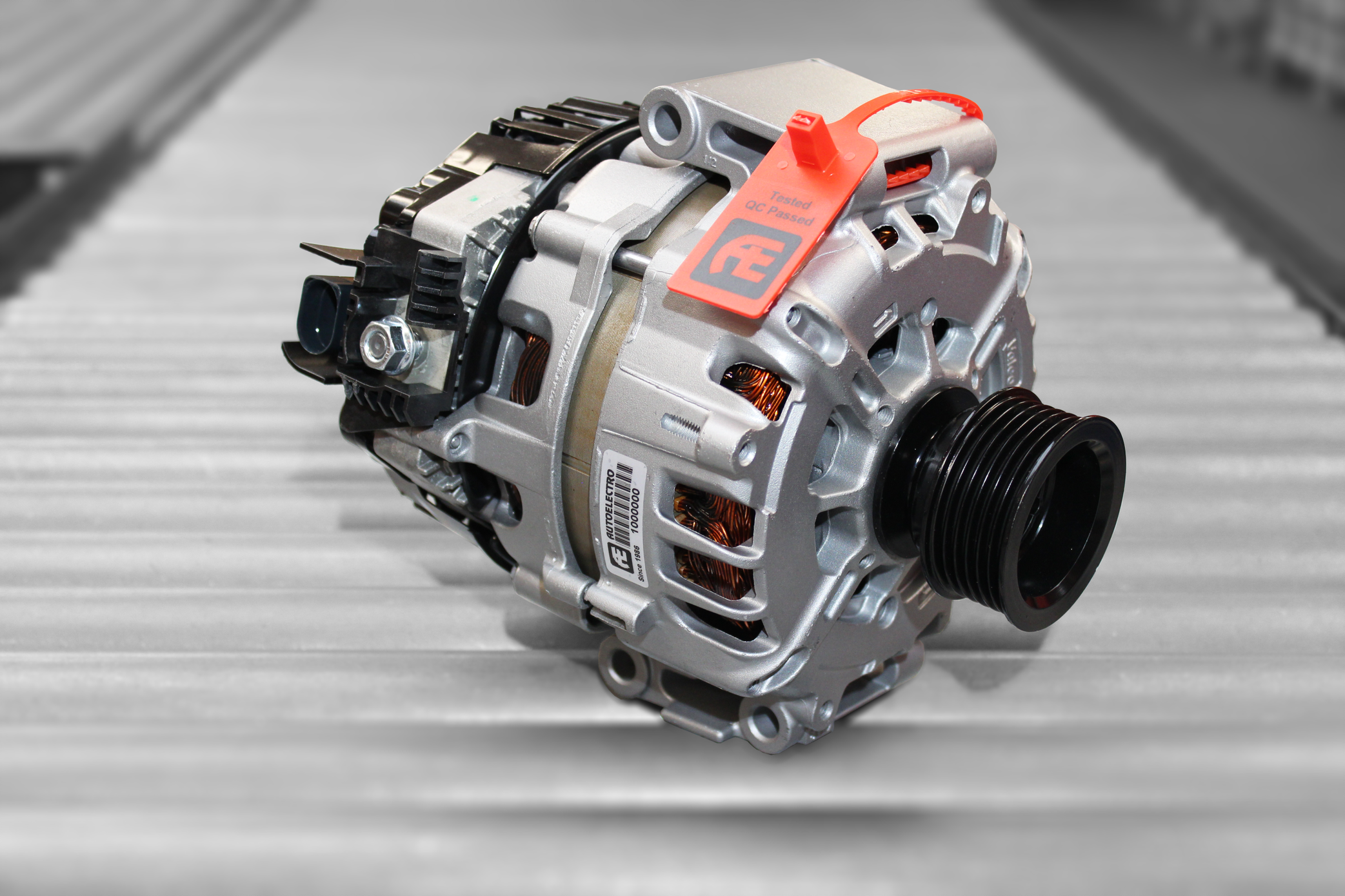
While the average age of a car in the UK continues to grow, recent figures say the new car part of the sector is fighting back – what does this mean for the aftermarket? Autoelectro believes remanufacturing is vital if the gap between old and new persists.
The traditional automotive aftermarket model has long assumed that as vehicles age, they are replaced by newer models, naturally reducing demand for parts supporting older platforms. Yet, market dynamics suggest different with consumers keeping vehicles for longer, resulting in a larger and older vehicle parc that demands sustained aftermarket support.
The average age of UK cars reached 10 by the end of 2024 – an increase of 16 percent compared to the end of December 20191 – while just over 40 percent of the car parc was over a decade-old by the end of December 2024, compared with just one in three at the end of 2015.2
Autoelectro believes vehicle prices, economic uncertainty, improved durability and longer warranties further supports the current trend.
Are things about to change?
Intriguingly, though, the Society of Motor Manufacturers and Traders’ new car figures for May showed the month’s strongest performance since before the pandemic, with registrations rising just over seven percent to 160,662 vehicles. It is worth noting that this figure is 12.6 percent down on pre-pandemic levels.
The SMMT hailed a “resurgence” in private buyers, with registrations in the sector up 17.2 percent as consumers responded to “increasingly competitive offers” from an “unprecedented” range of brands.
Autoelectro’s Harnek Bhogal acknowledges the SMMT’s latest figures but doesn’t believe the market is reverting – rather a trade in transition.
He said: “Recent new-car registration figures suggest the market may be entering a recovery phase. Despite record May numbers, these remain well below pre-pandemic levels and the UK’s car parc is turning over relatively slowly.
“Even if new-car demand continues to strengthen, the huge number of older vehicles already on the road is likely to sustain demand for aftermarket parts, like starter motors and alternators, for many years to come.
“The more significant question is whether the aftermarket is prepared for this transition.”
Autoelectro confident of response
At Autoelectro, celebrating 40 years of serving the trade in 2026, the remanufacturer is primed for all scenarios. Thanks to its modern equipment and staff with decades’ worth of expertise, the company has the ability to remanufacture, stock and supply legacy and hard-to-find parts to meet demand from the ageing car parc while continuing to adapt alongside the market.
Just in the last few months, Autoelectro has sold starter motors and alternators for the likes of a VW Golf Mk1 1.6 (1980), Range Rover Mk1 3.5 (1980), Austin Metro 1.4 (1990) and Porsche 944 2.5 (1986).
Harnek continued: “The traditional supply chain focuses on higher-volume, faster-moving parts, which means factors and workshops can struggle to source parts for rare or ageing applications.
“While acknowledging the ‘supply and demand’ logic, the issue is when demand is high and supply is low. We argue that a factor’s opportunity to add value and margin is huge – how many filters does a factor have to sell to make similar margin to that of selling a starter motor for a 1990 Lamborghini Diablo that sells for £1,000-plus?”
How is Autoelectro able to keep stock high?
As a remanufacturer, Autoelectro is uniquely placed to meet lower volume demands because it is not restricted by traditional production volumes, which are designed for high output. Its work with old cores allows low-volume applications to remain available for longer than conventional thinking would suggest.
Harnek said: “This hands-on approach in production enables us to offer technical insights that might otherwise be lost as the market evolves, helping to preserve valuable skills and knowledge within the industry.”
Efficient processes and systems crucial
Because of its focus at the top-end, the aftermarket can forget the tail-end of the range, despite it being where significant margins can be gained. Autoelectro knows that, with remanufacturing, these forgotten references can be given a new lease of life – for the benefit of the motor factor and end-user.
Harnek pointed to the importance of an efficient and reliable core recovery system: “We invest in systems and processes, such as our 1986 Dashboard, along with technical and production expertise, specialist inventory management software, and systems to ensure we remain efficient enough to sustain this.
“Maintaining this is crucial for the process to remain cost-effective, allowing us to continue operating.”
Conclusion
The automotive aftermarket is experiencing a shift as consumers keep their vehicles longer, leading to a larger and older vehicle parc that requires sustained aftermarket support. Despite a recent increase in new car registrations, the demand for parts for older vehicles remains strong.