
Euro 7 Puts Brake Emissions Firmly on the Aftermarket Agenda
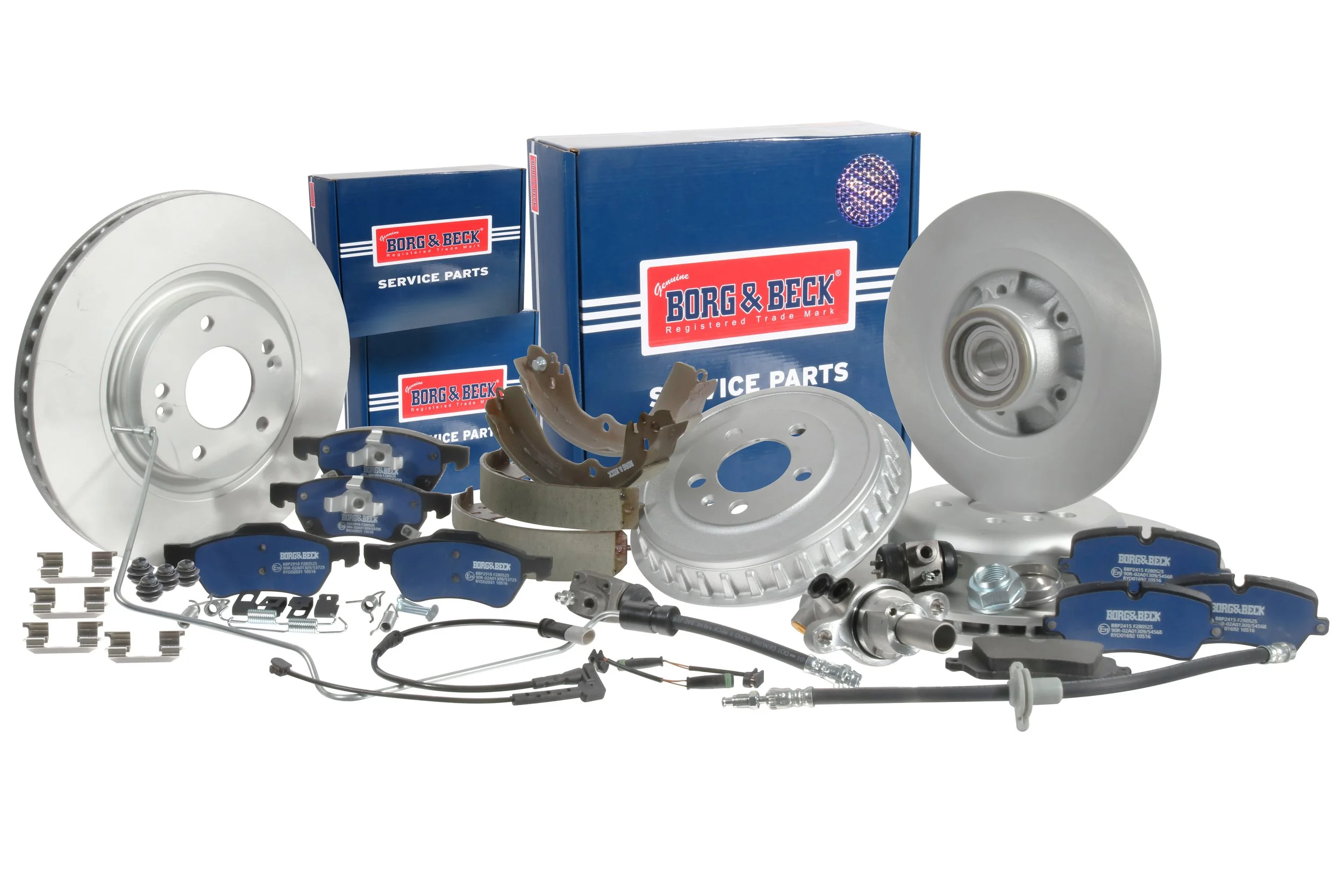
As the automotive industry continues its drive towards reducing vehicle emissions, attention is increasingly turning beyond the exhaust. First Line Ltd. explains how brake particulate emissions are an important consideration for the aftermarket and why Euro 7 will influence the development of future braking components.
Every time a vehicle brakes, friction between the brake pad and disc causes a small amount of material to wear away. These particles contribute to non-exhaust vehicle emissions and, with Euro 7 introducing limits on brake particle emissions, their environmental impact is moving firmly into focus.
More Than an Air Quality Issue
The smallest brake wear particles can contribute to airborne fine particulate pollution and can be inhaled deep into the lungs, where exposure may be associated with irritation, inflammation and wider respiratory health concerns.
The impact is not confined to the air. Brake particles deposited on road surfaces can be washed by rainfall into drains, rivers and other waterways, carrying metals and contaminants that can affect aquatic organisms and contribute to the wider accumulation of pollutants in the environment.
For the aftermarket, this adds another consideration when selecting replacement braking components. High specification, material consistency and durability are important not only for braking performance, but also in helping to prevent premature wear.
Borg & Beck has continually evolved its braking range in response to changing legislation, vehicle technology and environmental expectations. This has included moving away from materials with greater environmental impact, while maintaining the performance, durability and safety demanded by workshops and motorists.
Borg & Beck braking components are engineered to meet stringent specification and performance requirements, including ECE R90 approval where applicable. Borg & Beck also works closely with its manufacturing partners on friction material development, ensuring that dependable braking performance and service life as well as environmental impacts are all considered.
Euro 7 changes the conversation
Euro 7 represents an important legislation change because brake particle emissions are being brought directly within European vehicle emissions regulation.
This presents a considerable technical challenge, as reducing the amount of particulate matter produced by braking cannot come at the expense of stopping performance.
Friction materials must continue to deliver effective braking, fade resistance, durability, low noise and driver comfort while generating fewer airborne particles. Brake discs must similarly provide high levels of wear resistance without adversely.
The challenge is being intensified by wider changes to the vehicle parc. Vehicles are becoming increasingly sophisticated and, in many cases, heavier, while braking systems must also operate alongside advanced safety technologies. Replacement components therefore need to keep pace with changing vehicle requirements.
What does this mean for the aftermarket?
The effect of Euro 7 will be gradual. As compliant vehicles enter the UK and European vehicle parc, the aftermarket will increasingly need replacement brake pads and discs capable of matching the requirements and characteristics of the original components.
This is likely to stimulate further innovation in friction materials and disc technology, with manufacturers looking to combine lower particulate emissions with the performance, longevity and refinement expected from modern braking systems.
There may also be opportunities for some of these developments to filter down to older vehicle applications. As lower-emission friction technologies become more established and commercially viable, they could potentially help reduce brake wear emissions across a wider proportion of the vehicle parc.
However, Borg & Beck stresses that safety must remain the overriding priority. Any alternative friction material introduced for an existing application must be properly developed and validated to ensure it provides the correct braking characteristics for that vehicle.
This is particularly important for motor factors and technicians. Rather than focusing solely on price, replacement brake components should be selected according to specification, application suitability and proven performance.
Will greener braking cost more?
There is inevitably a cost attached to technological improvements. New friction materials, additional testing and increasingly demanding performance requirements are likely to increase manufacturing costs, particularly during the early stages of Euro 7 adoption.
This could translate into higher prices for some replacement components specifically engineered to meet the new requirements. However, as production volumes increase, technologies become more widely adopted and manufacturing processes mature, costs should become more competitive over time.
As environmental scrutiny extends beyond the tailpipe, braking is set to become an increasingly important part of the emissions conversation. Euro 7 may be driving the latest change, but its influence is likely to reach much further, encouraging innovation throughout the aftermarket and placing an even greater emphasis on the specification and engineering behind every replacement brake component.
For Borg & Beck, the objective remains the same – to provide the aftermarket with braking components that balance premium quality, performance, compliance and value.