
Supertracker launches new vehicle lift range
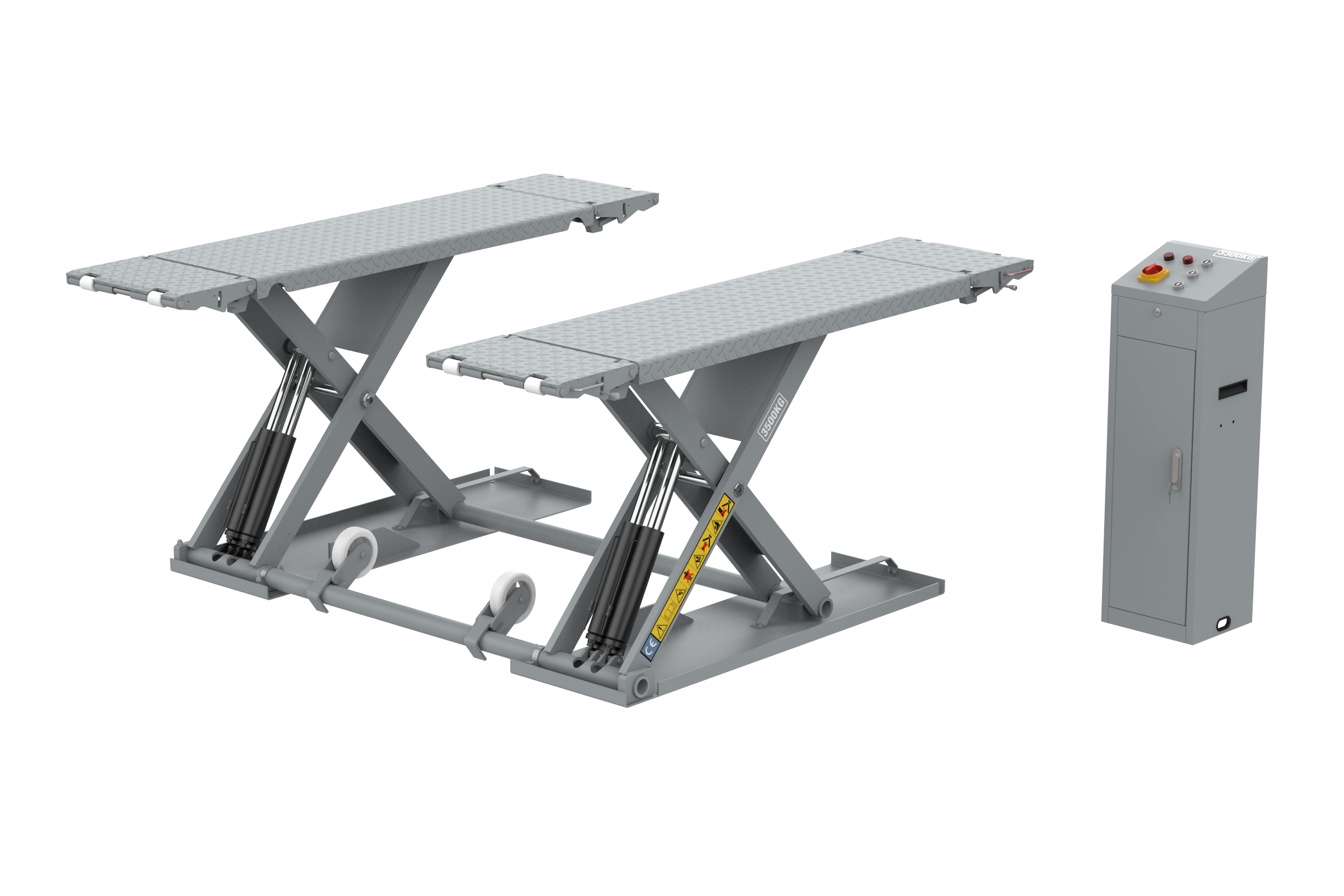
Supertracker has announced the launch of its new vehicle lift range, bringing a deliberately simplified, specification-led approach to a market increasingly frustrated by over-engineered and impractical workshop equipment.
Following an 18-month programme of evaluation, testing and production, the new range expands Supertracker’s portfolio to include two-post lifts, scissor lifts and EV battery handling solutions, designed to meet modern workshop demands without unnecessary complexity.
The decision to develop the range followed growing customer demand for reliable lifting equipment that meets European quality expectations, without compromising on build standards or usability.
“The reality is that the quality and specification coming from the Far East is now very much aligned with European expectations,” said Andrew Bates, Managing Director of Supertracker. The key was finding the right partner, one willing to build to our specification, not just supply off-the-shelf products.”
Built to Supertracker specifications
During development, Supertracker evaluated dozens of manufacturers before selecting a partner capable of adapting designs to meet European technician requirements. A key example is the company’s 4.5-tonne two-post lift, engineered to raise vehicles to 2.0 metres, significantly higher than the 1.8 metres typically offered, addressing the practical needs of taller technicians and improving day-to-day working comfort.
All lifts are UKCA and CE certified and conform to BS EN 1493:2022, reinforcing Supertracker’s commitment to safety and compliance. Products are stored at Supertracker’s Worksop facility,
Keeping it simple in a complex market
Rather than adding layers of technology for technology’s sake, Supertracker has taken a K.I.S (Keep It Simple) approach to lift design.
“Workshop equipment has become overly complicated,” Andrew added. “Complex synchronisation and smart alarm systems are not always compatible with the workshop environment. Using PCBs and touchless sensors have been weak spots on lifts. Returning to older, tried and tested principles will enhance reliability without compromising safety, and enable equipment engineers to fix first time instead of swapping out modules”.